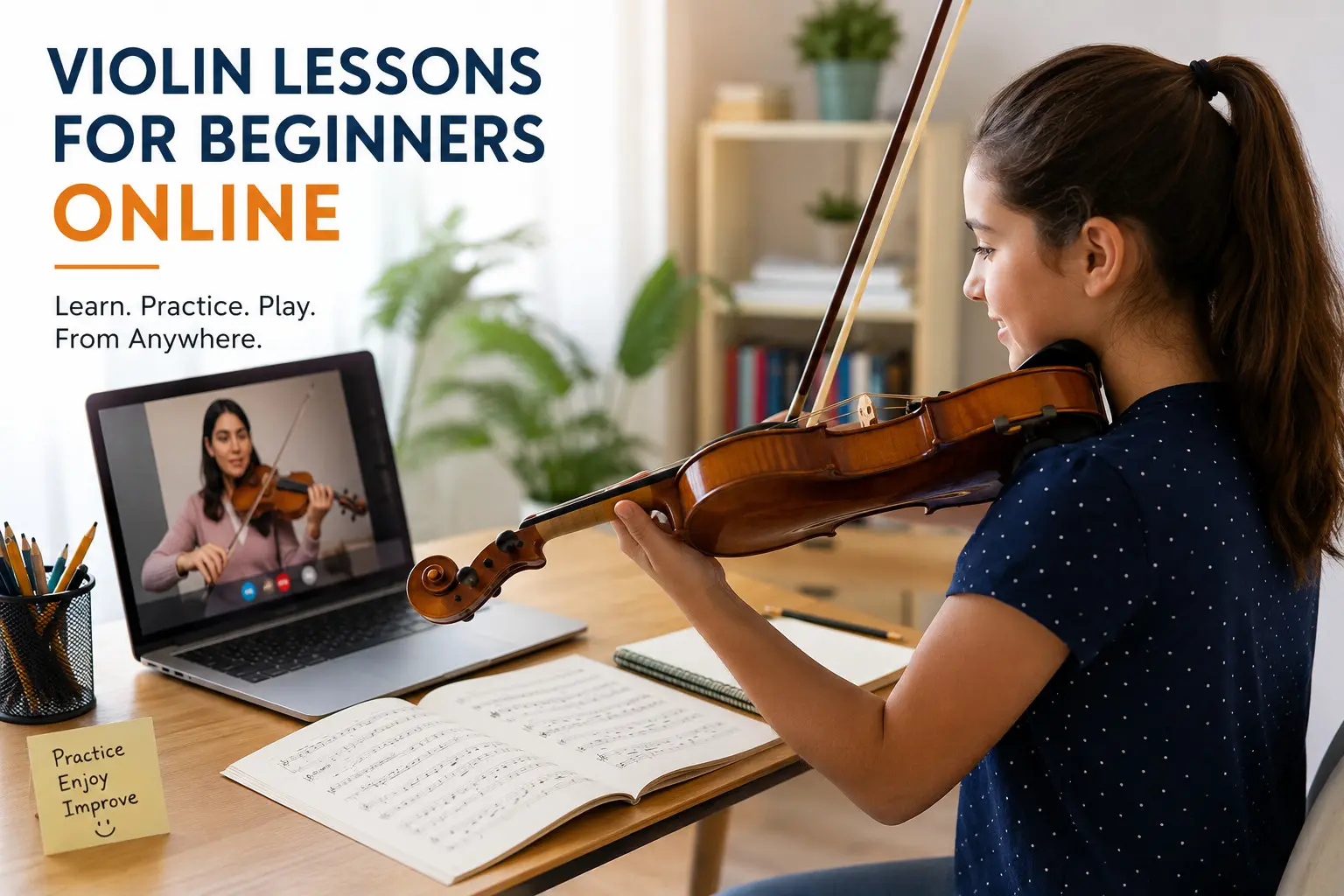
The Suzuki Method Violin is one of the most popular and respected ways to teach violin, especially for young kids. It was created with the belief that musical ability can be learned like a language. This method uses listening, repetition, and encouragement instead of pressure or early note reading.
Right now, the Suzuki Method Violin is used around the world and is trusted by teachers and parents who want a strong, supportive start for learning violin.
What Is the Suzuki Method Violin?
The Suzuki Method Violin is based on the idea that children can learn music in the same natural way they learn to speak their native language through listening, repetition, and imitation. Instead of starting with sheet music, students are first exposed to music by regularly listening to violin pieces, which helps them develop a strong sense of rhythm, tone, and musical memory. They then begin playing these pieces by ear, gradually building confidence and familiarity with the instrument.
This approach creates a more intuitive and less stressful learning environment, especially for beginners and young children. It places a strong emphasis on positive reinforcement, encouragement, and consistent practice, helping students stay motivated and engaged throughout their learning journey. Parents are often involved in the process as well, providing support and creating a structured practice routine at home.
How the Suzuki Method Violin Works
In Suzuki violin lessons, students begin by listening to recordings of the pieces they are learning every day. This consistent exposure helps them naturally develop important musical skills such as pitch recognition, tone quality, rhythm, and overall musical memory. By hearing the music repeatedly, students become familiar with how it should sound before they even start playing, which makes the learning process smoother and more intuitive.
Lessons typically include a combination of one-on-one instruction and group classes. Individual lessons allow teachers to focus on each student’s technique, posture, and progress, while group sessions create a supportive environment where students can learn from one another, build confidence, and stay motivated. Watching peers perform also encourages healthy learning and improvement.
Benefits of the Suzuki Method Violin
- The Suzuki Method Violin offers many benefits for learners of all ages, especially kids:
- Builds strong listening skills
- Develops proper playing techniques from the start
- Encourages confidence and discipline
- Creates a positive and encouraging learning environment
- Helps students progress in small, manageable steps
- Because the Suzuki approach emphasizes repeating what they learn, students often develop a good tone and a strong sense of music.
Is the Suzuki Method Violin Only for Children?

While the Suzuki Method Violin is best known for teaching young children, it also works for older beginners and even adults. With proper guidance and regular practice, anyone can benefit from this structured and supportive way of learning.
Adults may start using music reading earlier alongside listening techniques.
Suzuki Method Violin vs Traditional Violin Lessons
| Feature | Suzuki Method Violin | Traditional Violin Lessons |
|---|---|---|
| Learning Approach | Learn by listening and playing by ear | Learn by reading music from the start |
| Focus | Repetition, memory, and listening skills | Music theory, notation, and technical reading |
| Best For | Beginners, especially young children | Older students or structured learners |
| Teaching Style | Supportive, step-by-step, parent involvement | More independent and structured |
| Pace of Learning | Gradual and comfort-based | Can be faster depending on the student |
| Music Reading | Introduced later | Introduced from the beginning |
| Environment | Encouraging and group-friendly | Formal and technique-focused |
| Flexibility | Often combined with other methods | Can also include mixed teaching approaches |
Traditional violin lessons often begin with music reading, while the Suzuki Method Violin starts with listening and playing by ear before introducing notes. Both methods are effective, but Suzuki is great for beginners who do best in a supportive, repetition-based setting. Many teachers use a mix of Suzuki and traditional techniques to give a balanced learning experience.
Final Thoughts
Many beginners feel overwhelmed when learning the violin because they start with complex note reading and strict techniques too early. This can make the process confusing, slow, and sometimes frustrating—especially for young learners or complete beginners. If the learning approach is too difficult or not engaging, students may lose confidence, struggle to stay consistent, or even quit before building real skills. This is one of the biggest reasons why many people fail to progress with traditional methods.
The Suzuki Method Violin solves this by focusing on listening, repetition, and encouragement, allowing students to learn music naturally just like a language. By building strong fundamentals first and introducing reading later, it creates a smoother and more enjoyable learning experience. Compared to traditional violin lessons, Suzuki offers a more supportive and confidence-building environment, especially for beginners. While traditional methods focus on reading from the start, Suzuki helps students develop musical ability step by step through ear training and consistent practice.
Frequently Asked Questions (FAQs)
What is the Suzuki Method Violin?
The Suzuki Method Violin is a teaching method that helps students learn violin through listening and imitation before reading music, similar to how children learn language.
Is the Suzuki Method Violin good for beginners?
Yes, the Suzuki Method Violin is perfect for beginners because it focuses on slow, steady learning, repetition, and encouragement, helping build confidence.
At what age can a child start Suzuki Method Violin?
Many children can start Suzuki Method Violin as young as 3 or 4, depending on their readiness and how much support from parents.
Do parents need to be involved in Suzuki violin lessons?
Yes, parent support is important in the Suzuki Method Violin, especially for young learners.Parents help guide daily practice at home.
Does the Suzuki Method Violin teach music reading?
Yes, music reading is taught after students have mastered basic playing skills through listening. Reading is introduced slowly as part of the process.
Can adults learn violin using the Suzuki Method?
Absolutely. Adults can benefit from the Suzuki Method Violin by using listening-based learning along with structured practice.
How is Suzuki Method Violin different from traditional lessons?
Suzuki Method Violin starts with listening and repetition, while traditional lessons usually begin with reading sheet music.