Playing the guitar is a popular and rewarding hobby that many people enjoy throughout their lives. If you’re a parent considering guitar lessons for your child, you may wonder when is the ideal time to begin. It’s important to consider a child’s age and readiness for guitar lessons to ensure a positive and successful learning experience. Below, we discuss the age best for a child to play the guitar.
Understanding Child Development and Music
Children develop at different rates, and their interest and ability in music can vary greatly. Some children naturally gravitate towards music from a young age, while others may develop an interest later. Recognizing and fostering a child’s musical interest and ability is important, as it can benefit their overall development.
Research has shown that music education enhances cognitive skills, improves memory and concentration, and promotes creativity and self-expression. It also helps children develop social skills and boost their confidence and self-esteem. Introducing children to music at an early age lays the foundation for a lifelong appreciation and enjoyment of music.
Best Age to Start Playing Guitar and Why Age Matters
Learning to play the guitar requires both physical and mental dexterity. Kids must be strong, coordinated, focused, and able to follow instructions to hold and play the guitar. While there is no definitive age to start guitar lessons, most experts recommend starting around 6-8 years old.
Children at this age can play the guitar and do things that need control of their small hand and finger muscles. They also have a longer attention span, allowing them to focus on practicing for a more extended period. However, it’s important to note that every child is unique, and some may be ready to start earlier or later than others.
5 Signs Your Child Is Ready for Guitar Lessons
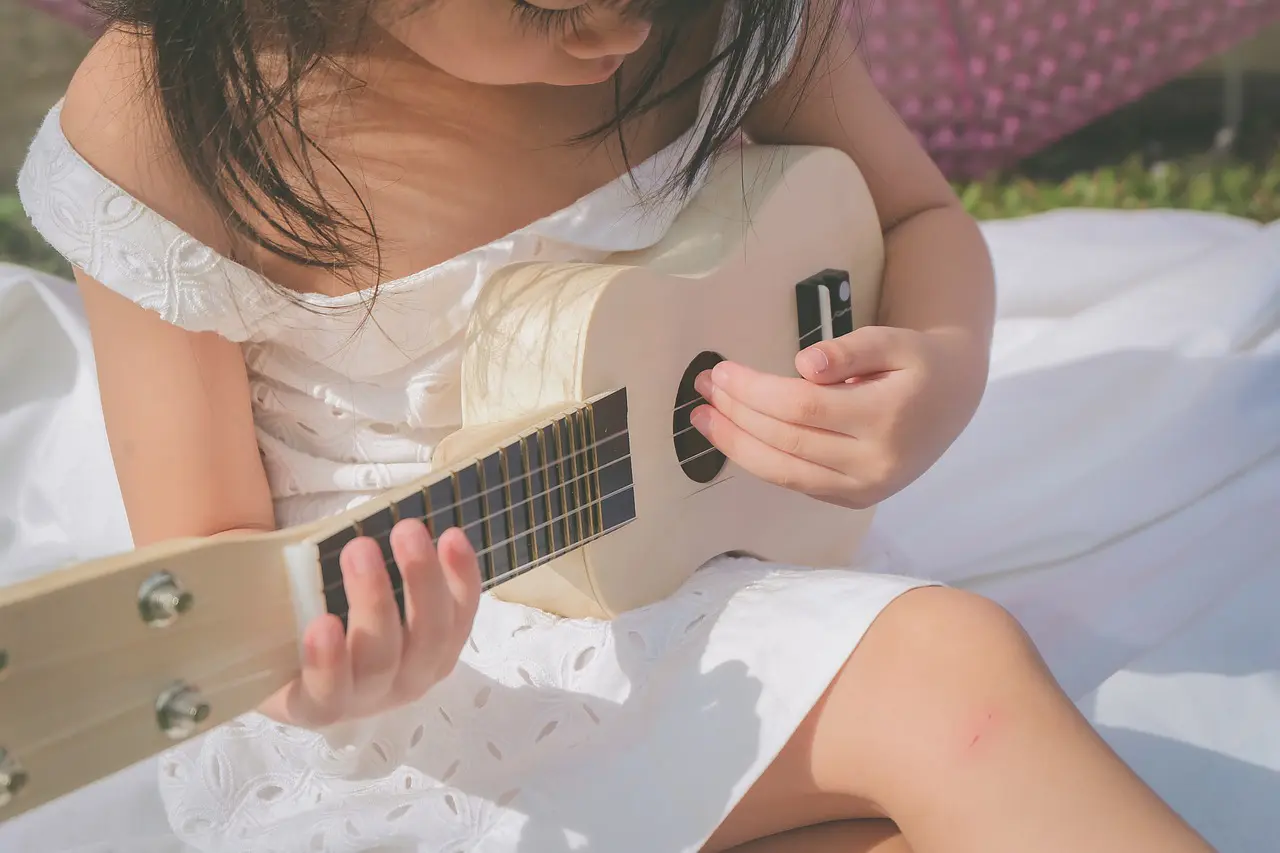
The Best Age to Start Playing Guitar
Before enrolling your child in guitar lessons, assessing their readiness is essential. Here are some signs that indicate your child may be ready to start learning the guitar:
- Interest in Music and Guitars: Your child shows an affinity towards music, enjoys listening to guitar music, or shows curiosity about the instrument. They may desire to learn to play the guitar or show excitement when they see someone playing it.
- Fine Motor Skills: Your child demonstrates the ability to perform actions that require control of small muscles in their hands and fingers. They can manipulate objects with precision and have good hand-eye coordination.
- Concentration Span: Your child has the ability to focus on a task for a prolonged period. They can engage in activities that require sustained attention, such as puzzles or drawing.
- Physical Strength: Your child can comfortably hold the guitar and press the strings. They should be able to maintain the proper posture and hand position while playing.
Responsiveness to Instruction: Your child is willing to follow instructions and guidelines. They are open to learning and can take direction from a teacher or mentor.
Introducing Your Child to the Guitar
Once you have determined that your child is ready for guitar lessons, it’s time to introduce them to the instrument. Here are some tips for sparking their interest in the guitar:
- Expose Them to Music: Play different genres of music that feature the guitar. Show them videos of live performances or concerts. Encourage them to explore different styles and find the music they enjoy the most.
- Let Them Experiment: Allow your child to explore and experiment with the guitar. Let them strum the strings, press the frets, and get familiar with the instrument. This hands-on experience can help them develop a connection with the guitar.
Start with a Beginner Guitar: When choosing a guitar for your child, choose one for beginners. There are various types and sizes available specifically designed for children. Consider factors such as their hands’ size and comfort level while holding the guitar.
The Role of the Parent in Supporting Your Child’s Music Lessons

As a parent, you play a crucial role in supporting your child’s music journey. Here are some tips to help you support their guitar lessons:
- Encourage Regular Practice: Set aside dedicated practice time each day and encourage your child to stick to it. Make it a routine and provide a quiet, comfortable space for them to practice.
- Provide Positive Reinforcement: Celebrate your child’s achievements and milestones along their guitar journey. Offer words of encouragement and praise for their efforts. This positive reinforcement will motivate them to continue learning and improving.
Be Patient and Understanding: Learning to play the guitar takes time and effort. Be patient with your child and understand that progress may sometimes be slow. Offer support and guidance without putting too much pressure on them.
In conclusion, the best age to start playing the guitar is typically around 6-8 years old, although it can vary depending on the child’s readiness. It’s important to consider factors such as their interest in music, fine motor skills, concentration span, physical strength, and responsiveness to instruction.
Recognizing their readiness and supporting their musical journey can help your child develop a lifelong love for playing the guitar. So, if you see these signs in your child, don’t hesitate to explore guitar lessons and nurture their musical talent.
Enroll Your Child in Guitar Lessons at Quartertonez
As a parent, you are in the best position to recognize your child’s readiness. So, listen to their interests, encourage their passion, and support them every step of the way. Quartertonez can help your child start playing guitar and reach their potential. Contact us today for private and group guitar lessons.
Discover a welcoming local music school in DC where students develop skills, confidence, and musical understanding
Final Thoughts: What’s the Best Age to Start Playing Guitar?
Many parents and beginners often feel confused about the “perfect age” to start learning guitar. This confusion can lead to either starting too early causing frustration or waiting too long and missing valuable learning time. Starting at the wrong time without considering readiness can result in poor technique, lack of interest, or even giving up altogether. Younger children may struggle with finger strength and focus, while older learners might feel they’ve missed their chance.
The best solution is to focus on readiness, not just age. Most children are ready between 6–8 years old, when they have enough coordination, attention span, and motor skills to handle the guitar properly. However, teens and adults can also learn successfully with proper guidance, consistency, and motivation. Compared to younger learners, who naturally develop rhythm and coordination early, older beginners often understand theory faster and stay more disciplined. Both paths have unique advantages, proving there is no single “perfect” age.
In the end, learning guitar is not about age it’s about passion and consistency. Whether you start at 7 or 37, the real success comes from enjoying the journey and staying committed. With the right approach and mindset, anyone can learn and master the guitar.
FAQs
1. What is the best age to start playing guitar?
Most experts recommend starting between 6 to 8 years old, as children at this age have the physical and mental readiness to learn effectively.
2. Can a 4 or 5-year-old learn guitar?
Yes, but it can be challenging. Younger children usually benefit from starting with simpler instruments like the ukulele before moving to guitar.
3. Is it too late to learn guitar as an adult?
No, adults can learn guitar at any age and often progress faster due to better focus, discipline, and motivation.
4. What factors matter more than age when learning guitar?
Key factors include interest, hand coordination, attention span, consistency in practice, and having the right teacher or learning method.