

The piano was invented by Bartolomeo Cristofori, an Italian musical instrument maker, around the year 1700 in Florence, Italy. Cristofori developed a revolutionary keyboard mechanism in which small hammers struck the strings, allowing musicians to control the volume of each note by changing how firmly they pressed the keys.
This ability to play both softly and loudly was a major innovation. Earlier keyboard instruments such as the harpsichord could not provide the same degree of dynamic control.
Cristofori’s invention eventually became known as the pianoforte, a name referring to its ability to produce both soft (piano) and loud (forte) sounds.
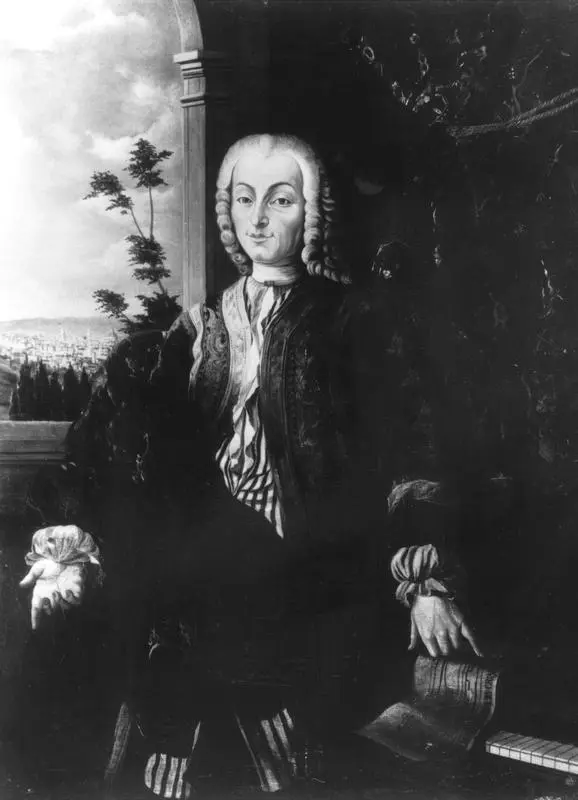
Who Was Bartolomeo Cristofori?
Bartolomeo Cristofori was an Italian musical instrument maker born in Padua in 1655. He became one of the most important figures in the history of keyboard instruments.
In the late 17th century, Cristofori was appointed to the court of Prince Ferdinando de’ Medici in Florence. His work involved caring for and building musical instruments, particularly keyboard instruments.
His experience with harpsichords gave him an opportunity to experiment with a problem that instrument makers had struggled with: how could a keyboard player control the volume and expression of individual notes?
Cristofori’s answer eventually led to the piano.
When Was the Piano Invented?
The piano was invented around 1700.
An inventory of musical instruments belonging to the Medici family from 1700 describes a newly invented keyboard instrument by Bartolomeo Cristofori that used hammers.
This historical record is one of the most important pieces of evidence for dating the invention of the piano.
The instrument became better known after Italian writer Scipione Maffei published a description of Cristofori’s invention in 1711.
Therefore, while you may occasionally encounter other dates associated with the invention, 1700 is generally recognized as the key date in the birth of the piano.
Where Was the Piano Invented?
The piano was invented in Florence, Italy.
Cristofori was originally from Padua, but he developed his groundbreaking keyboard instruments while working for the Medici court in Florence.
Italy was already an important center for musical instrument making, art and musical innovation. Cristofori’s work added one of history’s most influential instruments to that tradition.
What Instruments Came Before the Piano?
The piano did not appear out of nowhere.
Before Cristofori’s invention, European musicians already used several keyboard instruments. Two particularly important predecessors were the harpsichord and clavichord.
Harpsichord
A harpsichord produces sound by plucking strings when its keys are pressed.
It could produce a bright, distinctive sound, but the player had relatively limited control over the volume of an individual note through touch alone.
Pressing a key harder did not create the same louder-note response that pianists expect from a modern piano.
Clavichord
The clavichord offered musicians greater expressive control than the harpsichord, but it produced a comparatively quiet sound.
Cristofori’s innovation helped solve an important musical challenge: creating a keyboard instrument that combined expressive control with greater power.
How Did Cristofori’s First Piano Work?
Cristofori changed the basic way a keyboard instrument produced sound.
Instead of having a mechanism that plucked the strings like a harpsichord, his instrument used hammers to strike the strings.
When a player pressed a key, the mechanism caused a hammer to hit the corresponding string.
More importantly, the force of the player’s touch affected the resulting sound.
Press a key gently, and the instrument could produce a softer note.
Strike the key more forcefully, and it could produce a louder note.
That concept remains fundamental to acoustic pianos today.
Why Was the Invention of the Piano So Important?
The piano gave keyboard musicians much greater control over dynamics and expression.
Imagine playing a piece of music where every note has almost the same intensity. Now imagine being able to make one phrase gentle and intimate, another powerful and dramatic, and gradually move between those extremes.
That expressive range transformed what composers and performers could achieve with a keyboard instrument.
Over time, the piano became central to Western classical music and later found a place in jazz, blues, pop, rock and many other musical traditions.
Why Is It Called a Piano?
The word piano is actually a shortened version of an earlier name for the instrument.
Cristofori’s creation was described in Italian using terminology associated with “piano e forte” — soft and loud.
The instrument became known as the pianoforte or fortepiano.
Over time, the name was shortened simply to piano.
The name therefore describes one of the features that made Cristofori’s instrument revolutionary: its ability to respond dynamically to the musician’s touch.
What Did the First Piano Look Like?
Cristofori’s early pianos did not look exactly like the modern grand pianos found in concert halls today.
They were strongly influenced by the shape and construction of harpsichords.
The basic concept, however, was revolutionary.
Cristofori developed a sophisticated hammer mechanism that addressed several mechanical problems involved in striking strings from a keyboard.
For example, the hammer needed to strike the string and immediately move away so that the string could continue vibrating rather than remaining pressed against it.
Solutions developed by Cristofori helped establish principles that would continue to influence piano construction.
Do Any of Cristofori’s Pianos Still Exist?
Yes.
Only a small number of pianos made by Bartolomeo Cristofori survive today.
One of the best-known surviving instruments was made in 1720 and is preserved by the Metropolitan Museum of Art in New York.
These surviving instruments provide historians and instrument specialists with invaluable evidence about how the earliest pianos were constructed and how Cristofori’s mechanism worked.
How Did the Piano Evolve?
The modern piano was not created in a single step.
Cristofori established the essential idea, but instrument makers continued improving the piano during the 18th and 19th centuries.
Pianos gradually gained:
- Stronger frames
- Greater string tension
- More powerful sound
- Improved hammer mechanisms
- Larger keyboards
- Better pedals
- Greater dynamic range
- More reliable actions
These developments allowed the instrument to perform in larger rooms and concert halls while giving composers increasingly broad musical possibilities.
How Many Keys Did Early Pianos Have?
Early pianos had considerably smaller keyboard ranges than most modern acoustic pianos.
Cristofori’s earliest documented instrument had a range of approximately four octaves.
The range expanded as composers and performers demanded more notes.
A standard modern piano generally has 88 keys — 52 white keys and 36 black keys — covering more than seven octaves.
That enormous range is one reason the piano is such a versatile instrument.
Who Invented the Modern Piano?
There isn’t a single inventor of the modern piano in the same sense that Bartolomeo Cristofori is credited with inventing the original piano.
Cristofori introduced the essential hammer-action concept.
Later generations of European and American piano makers refined virtually every part of the instrument, including its action, strings, frame, pedals, keyboard range and overall construction.
The modern piano is therefore the result of more than three centuries of development built upon Cristofori’s original breakthrough.
Piano vs. Harpsichord: What’s the Difference?
The most important difference is how the strings produce sound.
A harpsichord plucks its strings, while an acoustic piano strikes its strings with hammers.
That difference changes how the instruments respond to the performer.
The piano’s hammer mechanism allows a musician to use touch to create significant changes in volume and expression.
This expressive capability is one of the main reasons the piano eventually became one of the world’s most influential keyboard instruments.
How the Piano Changed Music
The piano eventually became much more than a technological improvement to existing keyboard instruments.
It gave composers an extraordinary musical canvas.
Musicians could perform melody and harmony simultaneously, accompany singers and other instruments, create dramatic dynamic contrasts and perform complex compositions independently.
Composers including Mozart, Beethoven, Chopin and Liszt helped demonstrate the extraordinary expressive possibilities of the instrument.
The piano later became equally important outside classical music.
Today it can be heard across jazz, blues, gospel, pop, rock, film music and countless other musical styles.
From Piano History to Playing Your First Notes
Understanding how the piano works can make learning the instrument even more interesting.
The same basic idea that made Cristofori’s invention remarkable more than three centuries ago remains part of learning piano today: the player’s touch shapes the sound.
Beginners don’t simply learn which keys to press. Piano study can also develop rhythm, listening, coordination, music reading, technique and musical expression.
At Quartertonez, students can explore these foundations through structured piano instruction designed for different ages, abilities and musical goals.
Frequently Asked Questions About the Invention of the Piano
Who invented the piano?
Bartolomeo Cristofori invented the piano around 1700 in Florence, Italy. He was an Italian musical instrument maker who worked for the Medici court.
What year was the piano invented?
The invention of the piano is generally dated to around 1700, based partly on a Medici inventory describing Cristofori’s newly invented keyboard instrument.
Where was the piano invented?
The piano was invented in Florence, Italy, where Bartolomeo Cristofori worked for the Medici court.
What was the piano originally called?
The instrument became known as the pianoforte, a name associated with its ability to play both softly (piano) and loudly (forte).
What instrument existed before the piano?
Important predecessors included the harpsichord and clavichord. Cristofori’s innovation was especially significant because his hammer mechanism offered keyboard players greater dynamic control.
Was the piano invented in Italy?
Yes. The piano was developed by Italian instrument maker Bartolomeo Cristofori in Florence around 1700.
Why did Bartolomeo Cristofori invent the piano?
Cristofori developed a keyboard instrument that provided greater dynamic control than instruments such as the harpsichord. His hammer-action mechanism allowed the volume of a note to respond to the player’s touch.
Are any original Cristofori pianos still around?
Yes. Three Cristofori pianos are known to survive, including an instrument dating from 1720 held by the Metropolitan Museum of Art in New York.
Learn Piano in Washington, DC with Quartertonez
Learning about Bartolomeo Cristofori and the history of the piano is fascinating, but the best way to understand the instrument is to experience it yourself.
At Quartertonez Music, we offer piano lessons in Washington, DC for students who want to build strong musical foundations, improve their technique and become more confident musicians.
Whether you’re a complete beginner, returning to the piano after a break or looking to advance your existing skills, our piano instruction can help you develop at your own pace.
Piano Lessons for Kids and Adults in Washington, DC
Our Washington, DC piano lessons are designed for students of different ages and experience levels. Lessons can focus on essential areas such as:
- Piano technique and proper hand position
- Reading sheet music
- Rhythm and timing
- Scales, chords and music theory
- Ear training
- Musical expression and dynamics
- Classical piano repertoire
- Building confidence at the keyboard
Just as Cristofori’s original piano gave musicians greater control over expression, modern piano study teaches students how touch, dynamics, rhythm and technique work together to bring music to life.
Looking for a Piano Teacher in Washington, DC?
If you’ve been searching for a piano teacher in Washington, DC, Quartertonez provides structured instruction with an emphasis on both technical development and musical understanding.
Our goal is not simply to teach students which notes to play. We help students understand the music they’re performing while developing skills they can continue building on over time.
Whether your goal is to learn your first song, develop classical piano technique, improve your music-reading skills or become a more accomplished pianist, Quartertonez can help you take the next step.
Ready to start playing? Explore our piano lessons in Washington, DC and find the right learning option for you.
Final Thoughts – Who invented the piano?
So, who invented the piano?
The answer is Bartolomeo Cristofori, an Italian instrument maker whose experiments in Florence around 1700 transformed keyboard music.
His most important breakthrough was deceptively simple: instead of plucking strings, his keyboard mechanism used hammers to strike them, allowing the player’s touch to influence how softly or loudly a note sounded.
More than three centuries later, that fundamental relationship between the pianist’s touch and the instrument’s response remains at the heart of piano playing.
Cristofori may never have imagined the concert grands, jazz pianos, upright instruments and modern keyboards that would follow his invention, but his work created the foundation for one of the most important musical instruments in history.


